
In the garage door business, organization isn’t a luxury—it’s a necessity.
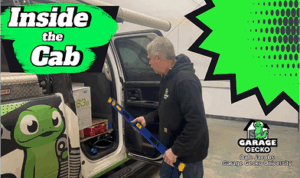
In this episode of Garage Gecko University, Dale shows how he organizes the tool and supply boxes on his service truck. From custom inserts to clearly labeled parts and smart inventory layout, his system saves time, increases efficiency, and shows customers that he’s a pro before he even starts the job.
The Problem with Messy Toolboxes
“I can’t tell you how many times I’ve opened a tech’s box and found tools and parts just piled in—a total mess.”
What Goes Wrong:
Expired parts, some over a year old
Tools “missing” but actually buried at the bottom
Wasted time hunting for critical parts
Pro Tip: A messy toolbox doesn’t just slow you down—it undermines trust and kills your credibility with customers.
A Better Way: Custom Tool Box Organization
Dale built removable custom inserts—no bolts, no screws, and easy to swap in under a minute. Every compartment is tailored for specific daily-use parts, making it simple to grab what you need and go.
Left Side Box: Daily-Use Parts & Rollers
Top-Shelf Essentials:
In-Drums for residential service
Residential Bearing Plates
7″ and 4″ Rollers, with color-coded straps for 4″ and 5″
10-foot Drums
“Everything’s arranged for easy reach. I drop the tailgate and grab exactly what I need—no digging, no delay.”
Cable Organization That Actually Works
Cable chaos? Not with Dale’s system.
7ft, 8ft, and miscellaneous cables
Labeled with toe tags and secured using wire ties
Grouped by size: 9’, 108”, 128”, 14’, etc.
Pro Tip: Tape doesn’t hold in heat. Use wire tags for long-term clarity.
“If you don’t know what you’ve got, you’ll waste time hunting or buying duplicates.” — Dale
Right Side Box: Hinges, Fixtures & Hardware
A full kit for residential and commercial service, all in one clear, weather-resistant system.
Hinges (1s, 2s, 4s, 5s) for doors up to 9′
Flat & specialty Bearing Plates
Top Fixtures: residential, Wayne Dalton, commercial
Bottom Fixtures & Slide Locks
J-Arms, Handles, Jam Brackets, Pull Cords
Everything is stored in clear Ziploc bags for easy visibility and fast access. Weatherproof, disposable, and no small parts mess.
Bonus Storage: Repair Orbs, Nose Brackets & More
Repair Orbs (hinged and standard)
Draw Bars
Helper Cones for backwinding springs
“People buy confidence. And I want to be confident in my work—knowing exactly where everything is.” — Dale
Cross Box: Spring Storage
Dale’s cross box is broken down by spring type and usage frequency, cutting down on wasted time and pinched fingers.
Front Section: High-use springs (207, 218, 234 wire)
Rear Section: Less common (250, 262, 273 wire)
Pro Tip: Dividing springs by usage saves fingers and boosts productivity.
Side Storage: Tools, Scales & Rubber
Quick-access essentials for jobs of all types.
Postal Scale (440PB) to weigh doors
Bottom Rubber in 17’ rolls
Deck Screws (short and 3-inch)
Nose Brackets & Pins for various opener models
Dale even keeps his scale in a backpack for mobility and fast check-ins.
The Payoff: Faster Jobs, Fewer Mistakes
With everything labeled, sorted, and easy to grab, Dale finishes jobs faster, avoids duplicates, and impresses customers with a clean, confident setup.
“This works for me. I hope it works for you.” — Dale
The Results:
Less wasted time
Fewer duplicate orders
Cleaner truck = better impression
Final Takeaway
Toolbox chaos is a silent profit killer. Dale’s clean, intentional setup keeps him in control—ready to work and impress. When everything has a place, you move faster, look sharper, and close more jobs.
Ready to clean up your own truck? Start with the side box. Your hands—and your customers—will thank you.
Stay tuned for more tips and episodes from Garage Gecko University.


 7-Day Money-Back Guarantee
