
Safety checklists are more than paperwork — they’re essential tools that protect customers, build trust, and improve your service quality.
In this episode of Garage Gecko University, Dale explains why thorough, consistent safety inspections are a must-have for every technician and manager, whether you work solo or lead a team.
Why Consistent Safety Checklists Matter
No matter your operation size, following a detailed safety checklist keeps your standards high and holds everyone accountable.
Dale points out that lapses in safety protocols become teachable moments — chances to help techs improve and avoid costly mistakes.
A complete, well-documented safety inspection report is invaluable when returning to a customer’s home. It:
Provides continuity by referencing past issues or maintenance
Ensures no problems slip through the cracks
Helps both technicians and customers understand the door’s history and current condition
How Safety Checklists Enhance Customer Confidence
Performing a visible, thorough safety inspection while the customer watches demonstrates transparency and professionalism.
Dale recommends using a tablet or mobile device on-site to fill out the checklist, allowing you to answer questions in real time and educate customers.
Investing just 10 minutes upfront to walk through the checklist can:
Increase sales
Reduce confusion
Build long-term trust
It shows you’re detail-oriented and genuinely care about their safety.
Key Components of a Garage Door Safety Checklist
Door Balance and Springs
Check door balance to prevent strain on openers, especially AC motors with plastic gears
Look for fatigued or underwound springs
A balanced door should stay put during power outages or manual use
Rollers, Drums, and Bearings
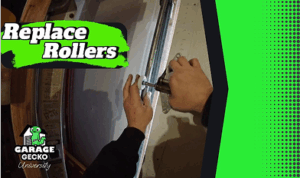
Inspect rollers for wear or scarring
Examine drums, especially on two-car doors, for damage
Assess bearing condition and material (plastic vs. metal)
Hinges and Panels
Look for tears, especially at hinge collars
Verify operator reinforcement brackets (ORB) are correctly installed
Document panel damage and types for future repairs
Torsion Tubes, Trolleys, and Safety Reverses
Inspect torsion tubes and vinyl components
Check trolleys for wear on models like LiftMaster
Test safety reverse and limit switches by simulating obstructions
Operators, Capacitors, and Controls
Verify operator types for diagnostics
Check capacitors for damage affecting motor start-up
Test sprockets and safety eyes for proper function
Customer Empowerment and Education
Teach customers how to adjust safety eyes and spot warning signs
Demonstrate keypad use and vacation mode
Inspect and reprogram remotes and wall buttons as needed
Wiring and Surge Protectors
Ensure all wiring is secure and insulated
Educate customers on surge protectors to avoid opener board failures and preserve warranties
The Importance of Detailed Notes
Recording every finding, exception, and customer interaction in checklist notes is critical.
Dale emphasizes detailed notes:
Improve team communication
Help technicians who revisit the same site
Create a strong, consistent service process
Conclusion
A thorough, consistent safety checklist is more than a formality — it’s the foundation of professional garage door service.
It protects customers, reduces callbacks, strengthens your team, and builds lasting trust.
Dale encourages every technician and manager to adopt disciplined safety inspections and use them to educate customers.
Thanks for joining Garage Gecko University — stay safe and organized out there!


 7-Day Money-Back Guarantee
